

Come project manager, posso dirti dove un campo remoto fallisce davvero. Non sono i dormitori. Sono i sistemi di "supporto vitale": la cucina, l'impianto idraulico e i servizi igienici.
Abbiamo visto i nuovi primi ministri spendere l'intero budget in dormitori di lusso, per poi rendersi conto di non avere alcun piano per sfamare 300 lavoratori o gestire le acque reflue.
Per esperienza personale, un campo di lavoro è un ecosistema vivo e pulsante. Un singolo punto di guasto, come una fognatura intasata o una cucina che non supera un'ispezione HSE, può bloccare l'intera attività multimilionaria.
Questa guida non riguarda le camere da letto. Riguarda le vere infrastrutture che rendono operativo un campo: le cucine, i servizi igienici e gli impianti di servizio.
1. La sala macchine: la tua cucina e mensa
Un equipaggio sazio è un equipaggio felice. Un equipaggio affamato è una rivolta in attesa di scoppiare. La cucina e la sala da pranzo (mensa) sono il motore del tuo accampamento.
- La sfida: Servire oltre 900 pasti caldi al giorno (300 lavoratori su 3 turni) in una località remota. Ciò richiede strutture di livello industriale, igieniche e durevoli.
- La soluzione: Una cucina modulare e una sala da pranzo dedicate. Non cercare di infilare una piastra elettrica in un dormitorio per gli ospiti. Hai bisogno di una cucina costruita appositamente. edificio modulare per la mensa del campo di lavoro con:
- Superfici igieniche: Piani di lavoro in acciaio inossidabile e pavimenti facili da pulire.
- Flusso chiaro: Un layout intelligente che separa la preparazione del cibo "crudo" dalla linea di servizio "cotto".
- Ventilazione adeguata: Cappe di livello industriale per la gestione del calore e del fumo.
- Conservazione a secco e a freddo: I congelatori/frigoriferi sono essenziali.
Caso di studio: Il Progetto di casa prefabbricata modulare Tencent Non si trattava solo di dormitori, ma anche di una mensa modulare completamente funzionale per supportare il personale altamente tecnologico. Questo dimostra che gli elevati standard di ristorazione sono universali.
2. Il sistema critico: abluzione e servizi igienici (toilette e docce)
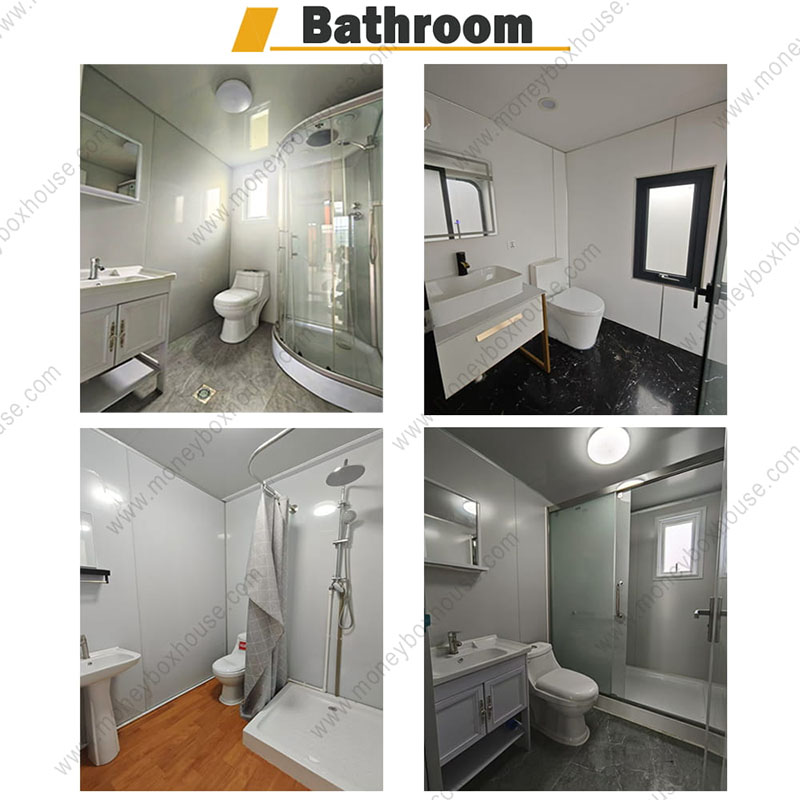
Ho visto più progetti bloccati per problemi idraulici che per qualsiasi altro problema. Un progetto di alloggio temporaneo con sistema fognario non è facoltativo.
- La sfida: Fornire acqua calda pulita e affidabile e servizi igienici a centinaia di persone in un luogo privo di fognature cittadine.
- La soluzione: Blocchi per abluzioni modulari pre-idraulici, realizzati appositamente.
- Il nostro metodo: Costruiamo toilette mobili E cabine doccia portatili In fabbrica. Tutti gli impianti idraulici interni, i sanitari e la pavimentazione impermeabile vengono installati e sigillati. In loco, il vostro team dovrà solo collegare l'ingresso principale dell'acqua e lo scarico principale delle acque reflue. Questo sistema "plug-and-play" è veloce, affidabile e riduce del 90% gli errori idraulici in loco.
3. La spina dorsale dei servizi pubblici: energia, acqua e rifiuti
Un campo è una piccola città. Ha bisogno di servizi comunali.
- Energia: il tuo campeggio sarà alimentato da generatori. Ciò significa che ogni singolo elettrodomestico, dai condizionatori ai congelatori della cucina, deve essere efficiente dal punto di vista energetico. Come spiegato nella nostra Guida all'isolamento, pannelli isolanti di alta qualità sono essenziali per gestire il carico energetico del tuo campeggio.
- Acqua: Per alimentare le cucine e i bagni pubblici è necessario disporre di un serbatoio di acqua potabile e di un sistema di riscaldamento dell'acqua (spesso una caldaia centralizzata).
- Acque reflue (fognature): Questo è il problema più importante. Non è possibile semplicemente scaricare le "acque nere" (fognature) e le "acque grigie" (da lavandini/docce). È necessaria una soluzione in loco, che in genere è un impianto di trattamento delle acque reflue (STP) modulare.
Panoramica: la checklist completa per un campeggio
| Facilità | Errore amatoriale (il campo "economico") | Soluzione professionale (il campo "TCO") |
| Cucina/Sala da pranzo | Pochi fornelli in un dormitorio. Alto rischio di incendio/HSE. | Mensa modulare dedicata con cucina in acciaio inox. |
| Igiene | Latrine di plastica. Docce fredde. | Blocchi per abluzioni modulari pre-idraulici con acqua calda. |
| Acque reflue | Nessun piano. Crea un rischio biologico. | Impianto di trattamento delle acque reflue modulare integrato (STP). |
| Risultato | Morale basso, ispezioni fallite, chiusura del progetto. | Alto morale, conformità HSE, stabilità operativa. |
Conclusione: smettete di comprare dormitori. Iniziate a costruire un sistema.
Il successo delle strutture del tuo campo di lavoro dipende dalla capacità del tuo fornitore di pensare oltre la camera da letto.
Possono progettare un sistema di scarico per la cucina? Possono fornire blocchi per le abluzioni pre-installati? Possono consigliare l'integrazione di un impianto di depurazione?
Questa è la differenza tra un "venditore di scatole" e un "partner di soluzioni". Noi di Moneybox abbiamo oltre 10 anni di esperienza nella fornitura di soluzioni complete e chiavi in mano per l'alloggio nei campi di lavoro. Ci occupiamo del "supporto vitale" in modo che tu possa concentrarti sul progetto.
- Richiedi un preventivo per un campeggio con servizi completi
- Esplora le nostre unità modulari per servizi igienici e abluzioni
Domande frequenti (FAQ)
1. Che cosa si intende per "unità abitativa modulare con servizi di ristorazione"? Si tratta di un edificio modulare appositamente costruito, spesso realizzato combinando diversi Pacchetto piatto O Tipo K unità. Comprende una zona cucina commerciale (preparazione, cottura, lavaggio) e un'ampia sala da pranzo open space (mensa) per i lavoratori.
2. Che dire del sistema fognario di un campo temporaneo? Non è possibile collegarsi alla rete fognaria cittadina. È necessario installare in loco un alloggio temporaneo per il campo con sistema fognario. Si tratta in genere di un impianto di trattamento delle acque reflue (STP) containerizzato o modulare. Questo impianto tratta le acque reflue in loco, consentendone lo scarico in sicurezza (ad esempio, per il controllo delle polveri) nel rispetto delle normative ambientali locali.
3. Ho bisogno di una cucina e di una sala da pranzo separate? Per qualsiasi campo con più di 50 persone, sì. La loro presenza combinata rappresenta un rischio significativo per la sicurezza e il rischio di incendi. Una mensa modulare dedicata è essenziale per l'igiene, la sicurezza e il morale dei lavoratori.
4. Cosa sono le "unità di abluzione"? Abluzione è il termine tecnico per "lavaggio". Un'unità di abluzione modulare è un edificio container pre-idraulico che include più servizi igienici, lavandini e docce in un unico blocco.


 Servizio Online
 +86-020-34800775+8618818900230
 export@moneyboxhouse.com
 +8615920397177
 1198017314
 italiano
  English
 español
 français
 Deutsch
 русский
 português
 Nederlands
 Ελληνικά
 हिन्दी